
By Hometown Dental
If you’re considering Invisalign, you’ve probably researched how long treatment takes, whether clear aligners are comfortable, and how often you’ll need to change trays.
But there’s a newer question that more patients are beginning to ask:
Can clear aligners release microplastics into your mouth?
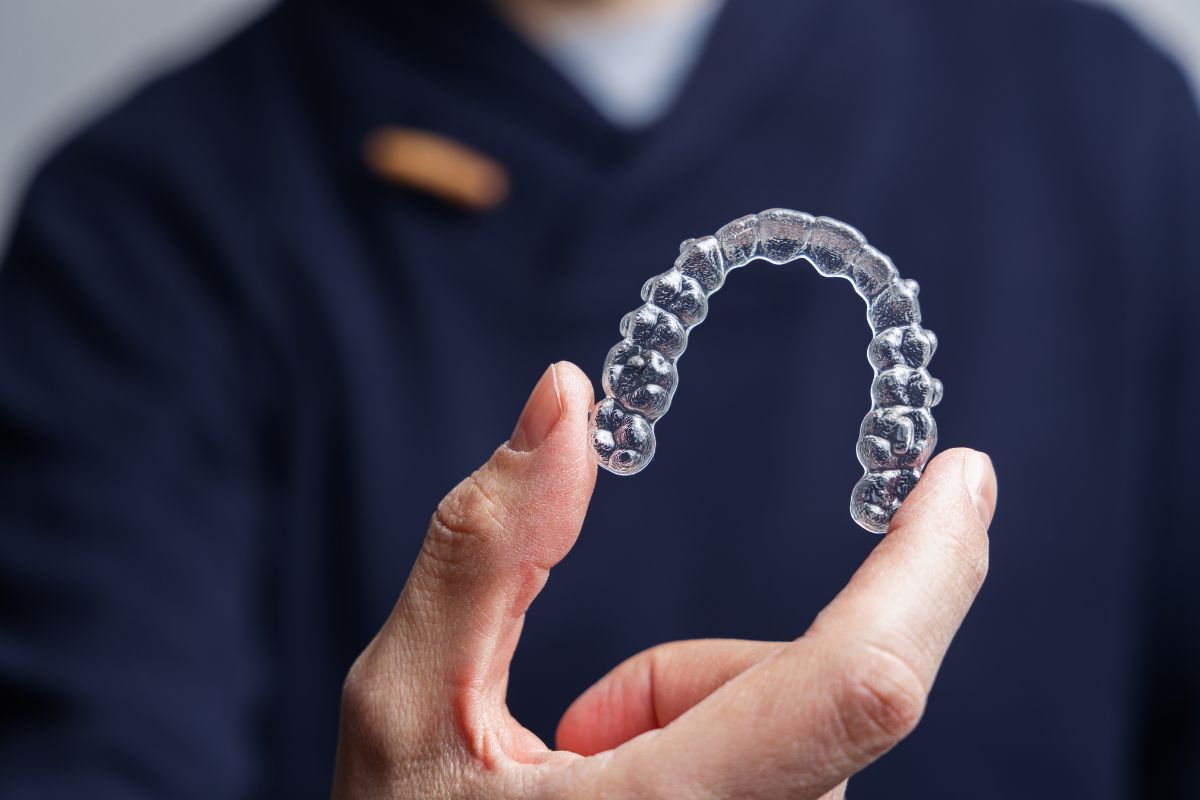
It’s a reasonable concern. Clear aligners are made from plastic-based materials and sit against your teeth and gums for much of the day. Recent research has found that microplastic particles can be released from clear orthodontic aligners under certain conditions.
That does not mean Invisalign has been proven dangerous.
For patients in Sedalia, MO, the important question is what researchers actually know and what remains uncertain.
Can Invisalign Release Microplastics?
Research suggests that clear orthodontic aligners can release microplastic particles during use.
A 2025 systematic review examined 11 studies investigating the behavior of clear-aligner materials. Most were laboratory or simulated-use studies rather than long-term studies in actual patients. Researchers reported evidence of microplastic dispersion, with identified particles ranging from approximately 5 to 20 micrometers in the studies reviewed.
A 2026 scoping review examined the growing body of research and identified six studies showing microplastic release from transparent aligners.
But the researchers made an important point:
The amount of health risk associated with this exposure is still unknown.
That’s very different from saying that Invisalign has been proven harmful.
Why Would Clear Aligners Release Plastic Particles?
An aligner isn’t sitting motionless in a laboratory.
During normal treatment, it is exposed to:
- Saliva
- Body temperature
- Chewing forces
- Friction against teeth
- Repeated insertion and removal
- Cleaning
- Daily wear
Over time, these factors can change the surface of polymer materials.
The 2025 review found evidence of changes in aligner surface morphology and increasing surface roughness during simulated aging.
That helps explain why researchers are studying whether tiny particles can detach from aligner materials.
However, particle release does not automatically establish toxicity.
Researchers still need to determine how much exposure occurs during normal treatment and whether those particles produce measurable health effects in humans.
Does This Mean Invisalign Is Unsafe?
Current evidence does not establish that Invisalign or clear-aligner treatment causes disease because of microplastic exposure. This distinction is critical. Researchers have demonstrated that particles can be released under experimental conditions.
They have not established that the amount released during typical treatment causes clinically meaningful harm. The 2026 scoping review specifically concluded that transparent aligners release microplastics but that their health implications remain unknown.
So claims such as “Invisalign is poisoning your body with plastic” go considerably beyond the available evidence.
At the same time, saying “there is absolutely nothing to investigate” would also ignore the emerging research.
The scientifically responsible position is somewhere in between.
Does Wearing Aligners 20-22 Hours Matter?
Clear aligner treatment requires consistent wear.
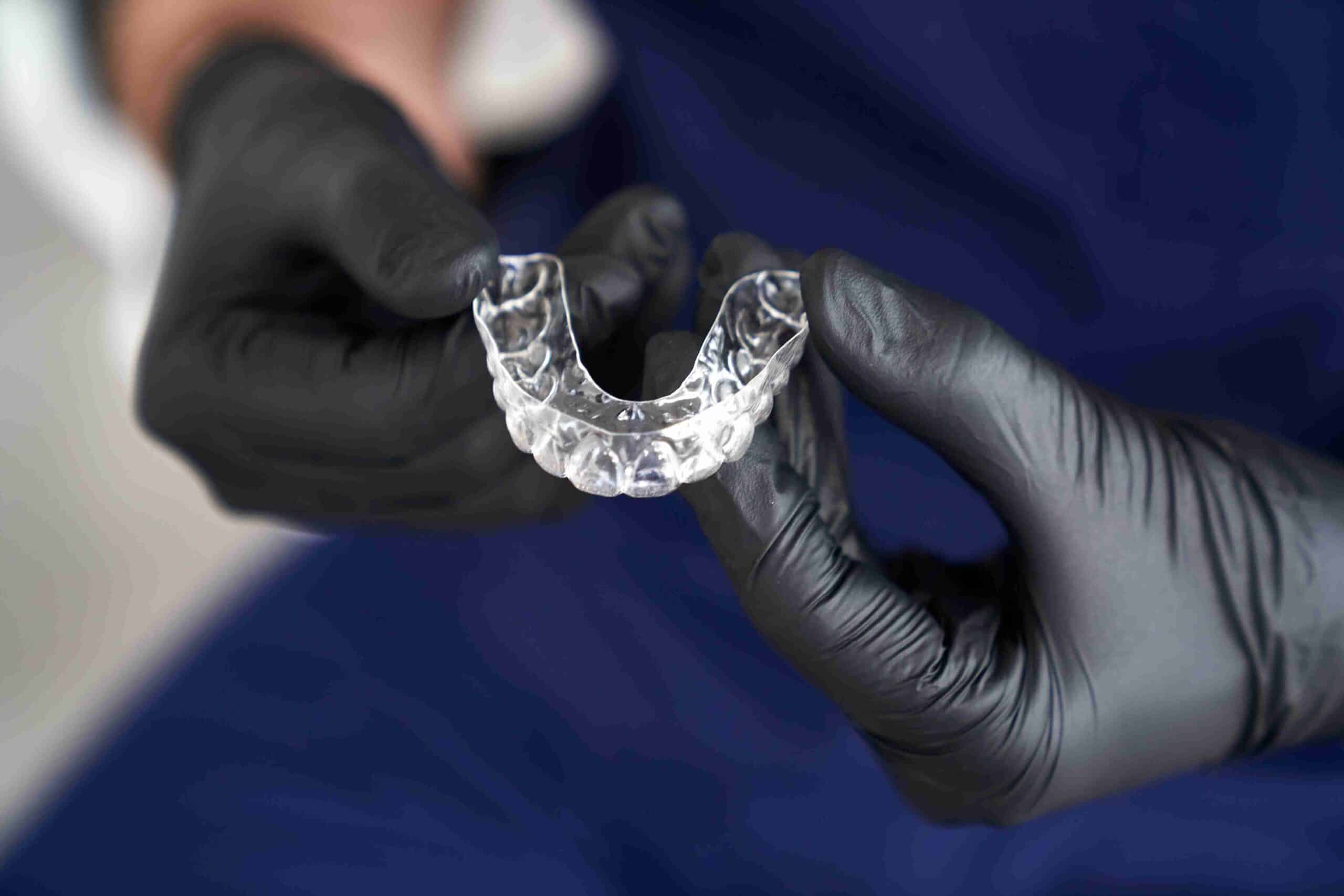
Hometown Dental explains that Invisalign uses a series of custom plastic molds that gradually move teeth and are typically worn throughout the day as part of treatment. More time in the mouth means more time for the aligner material to interact with saliva, teeth and oral tissues.
But researchers have not established a simple rule that says:
More hours of wear = dangerous microplastic exposure.
The amount and type of particle release can depend on the material, manufacturing process, surface condition, wear period and other factors.
That’s why current research cannot yet provide patients with a precise “safe exposure limit.”
What About Scratched or Damaged Aligners?
A visibly damaged aligner deserves attention regardless of microplastic concerns.
- Deep scratches, cracks or significant surface damage can affect how an aligner fits and functions.
- Don’t aggressively scrub an aligner with abrasive products to make it look cleaner. Follow the cleaning instructions provided by your dental team.
- If a tray becomes cracked, warped or unusually rough, contact your dentist rather than continuing to wear it indefinitely.
Proper maintenance is useful for both oral hygiene and appliance condition.
Can Cleaning Cause More Plastic Wear?
Potentially, depending on the method.
- Clear aligners should be cleaned according to the manufacturer’s or dental provider’s instructions.
- Avoid using very hot water unless specifically instructed because heat can distort some aligner materials.
- Aggressive brushing or abrasive cleaning products may also unnecessarily roughen the surface.
A simple approach is usually better: Clean gently. Rinse properly. Store the aligner safely. Follow your replacement schedule.
Should You Stop Invisalign Because of Microplastics?
There is currently not enough evidence to recommend stopping prescribed clear-aligner treatment solely because microplastic release has been detected.
The established benefit of orthodontic treatment is the controlled movement of teeth to improve alignment and, when appropriate, bite. The microplastic question is different: researchers are still determining whether the particles released during treatment have meaningful biological effects. That means patients shouldn’t make a treatment decision based on a headline alone.
Instead, ask your dentist about the specific aligner material, treatment plan and available alternatives.
What Should Sedalia, MO Patients Ask?
If you’re considering Invisalign in Sedalia, MO, ask:
- What material are my aligners made from?
- How should I clean them?
- How frequently will I replace each tray?
- What should I do if an aligner cracks?
- How many hours should I wear them?
- What alternatives are available if I prefer braces?
- How will my teeth and gums be monitored?
At Hometown Dental, Invisalign is offered in Sedalia as an alternative to traditional braces, with customized plastic aligners designed to gradually move the teeth.
The practice also provides routine dental care, including examinations that evaluate the teeth and gums and screen for concerns such as periodontal disease.
For patients in Sedalia and nearby communities, that combination matters. Clear-aligner treatment shouldn’t be viewed separately from overall oral health.
If you’re considering Invisalign and have questions about aligner materials, schedule an appointment with the Hometown Dental team.
You can also meet our doctors, including Dr. Patrick Lancaster and Dr. Eric Etheridge, and discuss whether clear aligners are appropriate for your smile.
What About Braces?
Traditional braces and clear aligners use different materials and treatment mechanics.That doesn’t automatically make one “microplastic-free” or universally safer.
The better comparison is based on your individual orthodontic needs, oral health, treatment goals and ability to maintain the appliance. If you’re concerned specifically about plastic exposure, bring that concern to your dentist before choosing a treatment.
You may have options.
The Bottom Line
Yes, research has detected microplastic release from clear orthodontic aligners.
No, current evidence has not established that normal Invisalign treatment causes clinically significant health problems from that exposure.
The 2025 systematic review found evidence of microplastic dispersion in laboratory and simulated-use research, while the 2026 scoping review concluded that the potential health consequences remain uncertain.
- That means the most responsible approach isn’t panic or dismissal.
- Use your aligners as prescribed.
- Clean them according to professional instructions.
- Replace them on schedule.
- Don’t continue wearing damaged trays without professional advice.
- And ask questions if you’re uncomfortable with the materials used in your treatment.
The science is still developing, and your dental care should be based on what is known, not what a viral headline claims.
Frequently Asked Questions (FAQ’s)
Can Invisalign release microplastics?
Research has detected microplastic release from clear orthodontic aligners, although the amount and health significance of that exposure remain uncertain.
Are microplastics from Invisalign harmful?
Current research has not established that microplastics released from clear aligners cause clinically significant harm during normal orthodontic treatment.
Should I stop wearing Invisalign because of microplastics?
There is currently insufficient evidence to recommend stopping prescribed clear-aligner treatment solely because microplastic release has been detected.
How can I reduce unnecessary wear on clear aligners?
Clean aligners gently according to professional instructions, avoid excessive heat and abrasive cleaning, and replace trays according to your treatment plan.
Are braces safer than Invisalign because they do not use plastic trays?
There is currently no evidence that patients should switch from clear aligners to braces solely because of microplastic concerns; the appropriate treatment depends on individual orthodontic and dental needs.